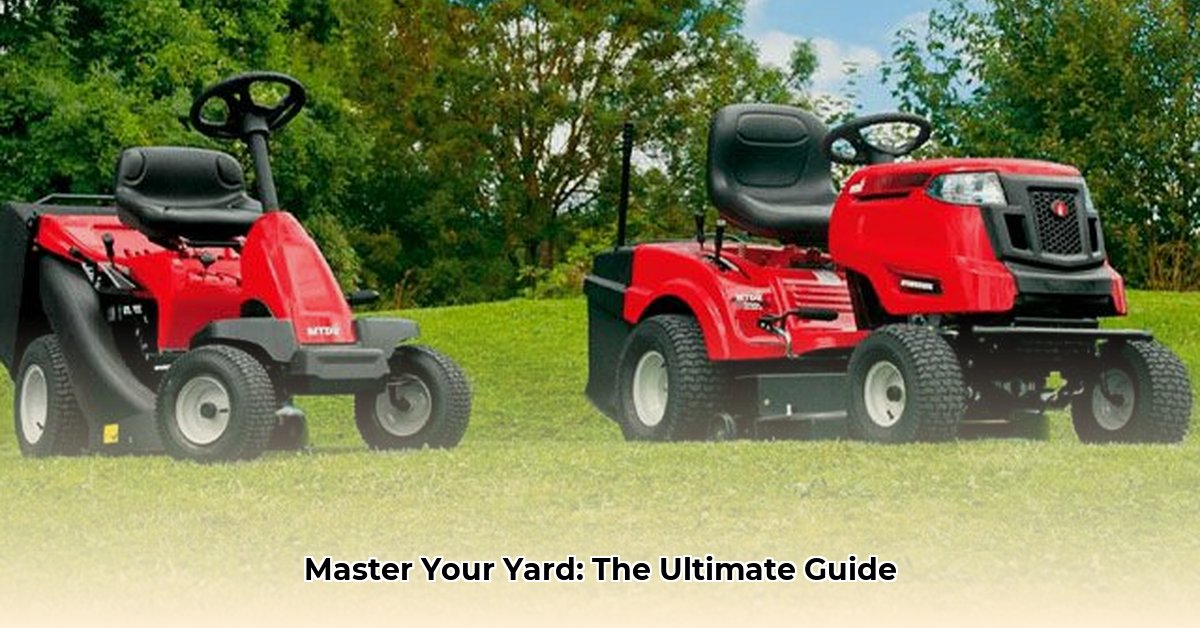
Choosing the right lawn tractor ("tractor para cortar yarda") can be daunting. This comprehensive guide simplifies the process, offering expert advice on selection, maintenance, and troubleshooting, ensuring efficient and enjoyable yard care. For more on tractor attachments, check out this helpful resource on brush cutter options.
Sizing Up Your Needs: Selecting the Right Lawn Tractor
Before you begin your search, assess your yard's characteristics. What's the size and terrain? A small, level lawn requires a different machine than a large, hilly property. Consider:
Yard Size: Larger yards demand a more powerful tractor with a wider cutting deck for increased efficiency. Smaller yards benefit from maneuverable, compact models. How much time are you willing to spend mowing?
Terrain: Hills, uneven surfaces, and obstacles require a robust tractor with superior traction and potentially four-wheel drive. Flat, level lawns allow for a wider range of options. Are there any hidden obstacles you need to account for?
Mowing Preferences: Do you prefer bagging, mulching, or side-discharging grass clippings? Each method requires different cutting deck types. Which method best suits your lawn's needs and your personal preference?
Budget: Lawn tractors vary significantly in price. Setting a realistic budget before you start shopping is crucial to avoid impulse buys. Do you intend to purchase a used or new tractor?
Engine Type: Gasoline engines offer readily available power but are louder and less environmentally friendly. Diesel engines are more fuel-efficient and durable but more expensive. Electric models are quiet and clean but have limited runtimes. What are your priorities: power, fuel efficiency, or environmental impact?
Key Features: Must-Haves for Your Ideal Lawn Tractor
Investing in a quality lawn tractor means prioritizing essential features. Consider the following:
Cutting Deck Width: A wider deck increases mowing efficiency, especially on large lawns. Is a wider deck worth the added cost and potential decrease in maneuverability?
Safety Features: A Roll-Over Protection Structure (ROPS) is crucial for safety in case of a tip-over. A well-designed blade engagement system minimizes the risk of accidental operation. Are you familiar with proper safety procedures for operating a lawn tractor?
Comfort Features: A comfortable seat and intuitive controls enhance the mowing experience, particularly for larger yards. What comfort features are essential for you?
Maneuverability: The turning radius impacts ease of use, especially in tight spaces or around obstacles. How easy do you need the tractor to be to maneuver?
Keeping Your Tractor in Top Shape: Essential Maintenance
Regular maintenance extends your tractor's lifespan and performance. Here’s a practical checklist:
Oil Changes: Change oil according to the manufacturer's recommendations to maintain engine health (typically every 25-50 hours of operation).
Blade Sharpening: Dull blades result in uneven cuts and damage your lawn. Sharpen or replace blades annually or as needed; a sharp blade ensures a clean cut.
Air Filter Cleaning: Regularly clean or replace the air filter to ensure proper engine airflow. A clogged filter reduces performance and can damage the engine.
Belt Inspections: Inspect belts for wear and tear. Worn belts must be replaced, failing to do so could lead to a breakdown.
Tire Pressure: Maintain proper tire pressure using a gauge for optimal traction and maneuverability. Check and adjust before each use.
Deck Cleaning: After each use, remove grass clippings and debris from the cutting deck to prevent build-up and maintain performance.
Tractor Para Cortar Yarda Engine Types: A Detailed Comparison
Engine choice significantly impacts performance, cost, and environmental impact.
| Engine Type | Pros | Cons |
|---|---|---|
| Gasoline | Powerful, readily available, relatively inexpensive | Higher emissions, louder operation, requires gas |
| Diesel | More fuel-efficient, longer lifespan, more torque | Higher initial cost, more maintenance, higher emissions |
| Electric | Quiet, zero emissions, low maintenance | Limited run time, high initial cost, charging needed |
"Selecting the right engine depends entirely on individual needs and budget," says Dr. Anya Sharma, Professor of Agricultural Engineering at Purdue University. "Consider your priorities and what works best for both your yard and the environment."
Troubleshooting Common Lawn Tractor Issues
Even with regular maintenance, problems may arise. Here’s how to address some common issues:
Engine Won't Start: Check fuel levels, spark plug condition (gap, corrosion), and battery charge. If needed, seek professional repair service.
Blade Won't Engage: Check safety switches and the engagement mechanism itself. Consult your owner's manual or a qualified technician.
Uneven Cut: Sharpen the blades. An uneven cut can also indicate a deck alignment problem.
Excessive Vibration: Inspect blades, belts, and the deck for damage. Excessive vibration often points toward a mechanical problem.
"Always consult your owner's manual before attempting DIY repairs," advises Miguel Rodriguez, a certified small engine mechanic. "Improper repairs can worsen the issue and lead to costly damage."
Environmental Impact: Mowing Responsibly
Consider the environmental aspects of your lawn tractor choice. Electric models are the greenest option, producing zero tailpipe emissions. However, even with gasoline or diesel tractors, proper maintenance minimizes emissions. "Choosing a fuel-efficient model and performing regular maintenance can significantly reduce your environmental footprint," says Dr. David Lee, Environmental Scientist at the University of California, Berkeley. "Investing in a well-maintained machine also reduces the need for frequent replacements, further mitigating environmental impact."